

Service Dog Training Tips: In-Home Tasks for Service or Therapy Dogs
I recently had an intensely visceral reminder of the power of a dog performing deep pressure. It’s the service task we train the most. I have seen numerous clients benefit from deep pressure over the years (such as Natan, pictured here with his poodle, Travel), but this was not for a client. It was for me.
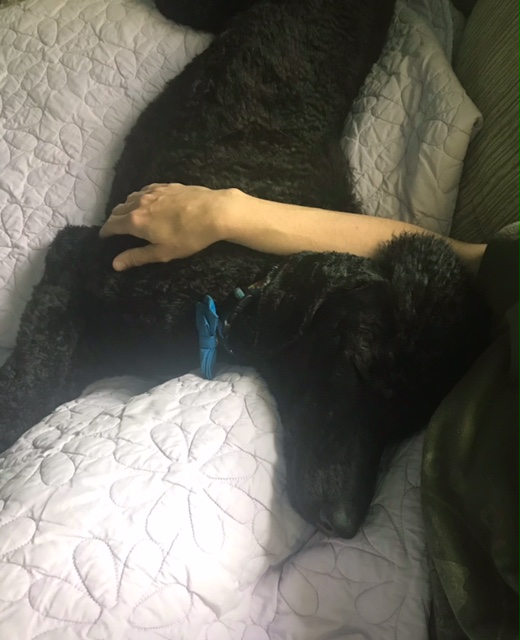
I suffered a concussion and needed a lot of sleep, but symptoms like vertigo, nausea, and anxiety often prevented it. At these times, my standard poodle, Kismet climbed into my lap and laid across my body. He could tell that I was not OK. Each time, his warm, comforting weight immediately calmed my nervous system and allowed me to fall asleep. I was so grateful.

Although Kismet’s temperament is not appropriate as a public access service dog, his instinctive response of comforting me when I was ill is exactly the type of dog that often excels with in-home tasks. However, if your dog doesn’t instinctively perform this task, or other tasks, that’s OK! You can train them!
In-home task training can be fun, fulfilling, improve our quality of life and functioning, and be a great way to bond with our dogs.
The Joy of Task Training
We often think of service tasks as the things that dogs do to help their human partners get around in the wider world — guiding to an exit, blocking from crowds, hitting an automatic door button. Tasks in public significantly improve a disabled person’s freedom and independence, but there are even more tasks a dog can perform at home to improve a handler’s life.
The number of in-home tasks you can train are limited only by your imagination! Examples:
- Sound alert (respond to your alarm clock, medication reminder, insulin pump alarm, or stove timer)
- Interrupt self-directed behavior (skin picking, scratching, etc.)
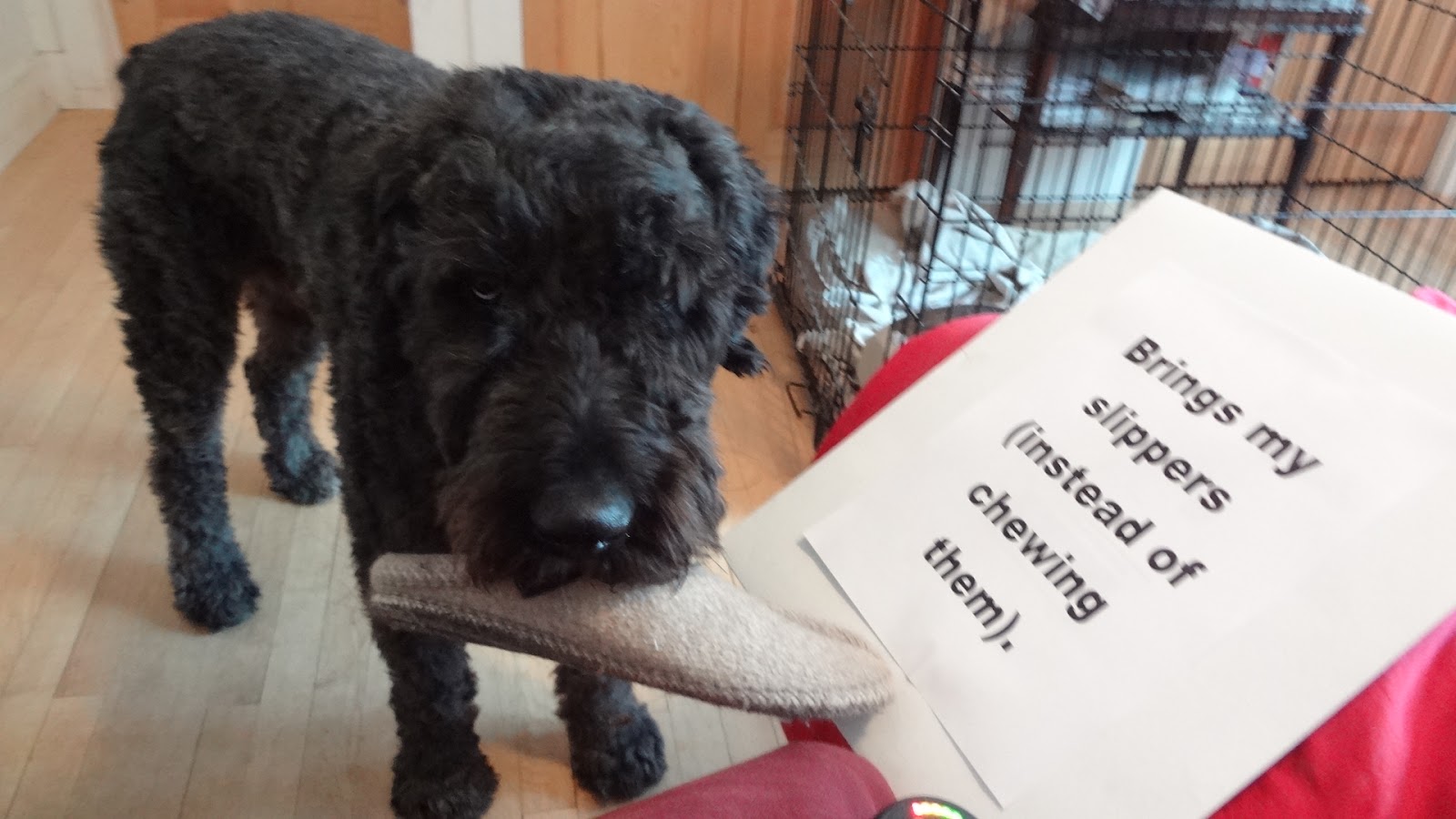
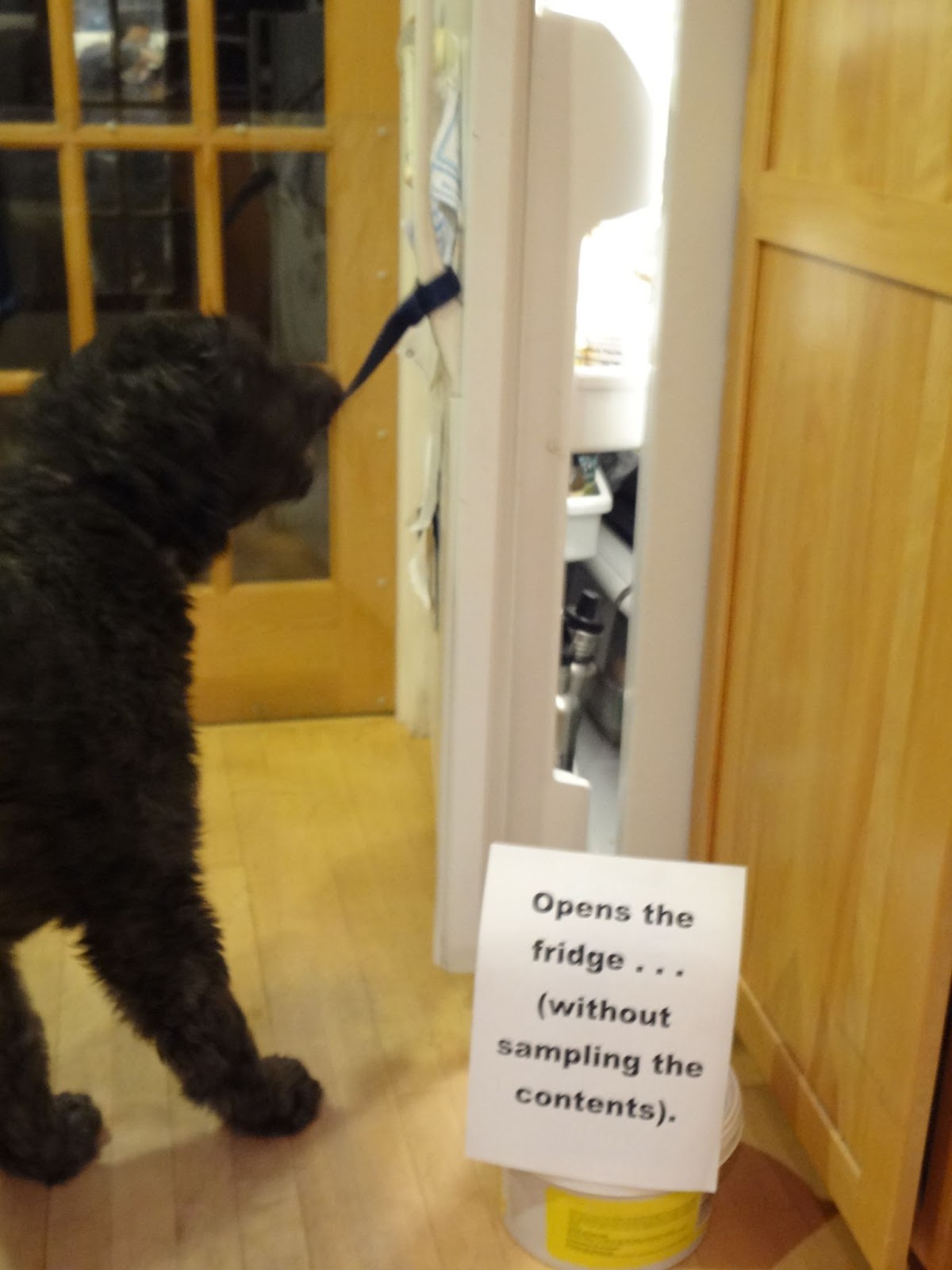
- Retrieve your slippers, shoes, cane, walker, or dropped items or even bring medication or water from a cupboard or refrigerator
- “Find help!” – get a family member or attendant
- Turn on a light (for PTSD, sleep, or mobility issues)
- Deep pressure or tactile stimulation (lie across your lap, lick away your tears, lean against your legs)
Best Situations for In-Home Task Training
In-home task training is still dog training – with all its joys and challenges – but without the stress of whether the dog will succeed in public. Also, because you don’t need to train public access manners and reliability first, in-home tasks can be much easier to train! The task training process is fun and mentally stimulating for the dog, great bonding for the team, and a positive activity for someone whose activities may be limited in other respects. The end result of the training – your fluffy companion eagerly helping you or your loved one – can be truly wonderful. Further, you can start any time — from puppyhood to senior years.
We train in-home tasks for these situations:
- An “in-home only service dog” or ESA that tasks at home for a child or adult with no plan to train for PA.
- Beginning task training as a foundation for future PA training –because all dog training is best started in a low-distraction setting.
- Future therapy dogs. We help social workers, school counselors, occupational therapists, etc., to train their dogs to help their clients/patients at work.
How to Get Started
First, make a list of helpful tasks. If you’re not sure, use a symptom log to identify what matters most. (Current clients – find our task selection handout and symptom log in the Client Portal.)
Next, decide on ONE task to start with. The ideal is a task for which your dog has a natural affinity. If you need to build training chops, start with the simplest task for a quick win! If you and your dog are skilled with precision training, pick the task that will improve the handler’s life the most.
Break down the task into all its components and train each component to reliability separately before combining.
Working with an experienced service dog trainer will take the guesswork out of task training, making it faster and easier. We have a variety of options to fit each team.
If your dog already has much of its public access manners training or is ready for task training as an in-home only service dog, online private lessons provide individualized task training with maximum support – a tailored training plan and step-by-step guidance. Start with a consultation with our head service dog trainer, experienced with both mobility and psychiatric service tasks.
If you have a puppy or young dog that needs foundation training for manners, public access, and tasks, PEARL DISC is the class to start. PEARL is level one of our Dogs in Service Certification (DISC) program. The cost is $425. You can REGISTER HERE and choose to pay all at once or pay in two installments to sign up.